The Ultimate Empordà Wine Tasting Guide for 2026: Hidden Wineries, Coastal Terroir & Must-Try Bottles
Discover the Empordà wine region in 2026: hidden wineries, coastal terroir, and must-try bottles in our ultimate tasting guide.
Nestled between the rugged Pyrenees and the sapphire Mediterranean, the Empordà wine region is one of Spain’s most thrilling—and underrated—oenological secrets. While crowds chase Priorat and Rioja, this wind-sculpted corner of Catalonia quietly crafts vibrant Garnatxes, saline Carignans, and crisp whites that bottle the salt and sun of the Costa Brava. Here, you’ll uncover hidden family-run bodegas untouched by tourism, see how the tramontana wind and granite soils shape every sip, and find a curated list of must-try bottles from the 2026 vintage. Planning a day trip from Cadaqués? Chasing the region’s next cult wine? This insider’s roadmap guides you to Empordà at its finest, right now.
Understanding the Empordà DO in 2026
The Regulatory Landscape and Designation Basics
The Empordà Denomination of Origin spans both the Alt and Baix Empordà comarques in Girona province, with the Consell Regulador certifying every bottle bearing the ‘Empordà’ name. Regulation in 2026 remains admirably flexible—sparkling wines, oxidative whites, and fortified sweet styles all find a place. Yet the practical focus has shifted firmly toward dry, terroir-driven wines, especially those rooted in the region’s granitic foothills and clay-limestone coastal plains. Recent vintage classifications reward restraint: lower extraction, reduced alcohol, earlier harvests, and extended lees contact. Traditional sweet wines—Garnatxa de l’Empordà and Moscatell—still sit under the same protective umbrella, but they now occupy a smaller, more curated niche, often reserved for aged solera releases. A few pioneering growers are informally trialing new sub-zone designations, though official recognition has yet to arrive.
The Tramuntana Wind and Its Impact on Wine Style
No conversation about Empordà in 2026 gets far without the Tramuntana—that fierce, dry north wind roaring down from the Pyrenees, sometimes gusting for days. It is the region’s defining climatic force. The wind mechanically stresses the vines, cutting yields by up to 30% in exposed parcels, thickening berry skins, and concentrating sugars and phenolics. The result is a signature style: wines from wind-battered, coastal-facing vineyards deliver bracing acidity, pronounced minerality, and a salt-tinged freshness—the DO’s calling card. Think of it as a natural cooling system that preserves elegance even in warm vintages. Sheltered inland plots, tucked into valleys between the Albera mountains and the Gavarres massif, tell a different story: softer, fruit-forward wines with rounder tannins and a more generous mid-palate. In 2026, the most exciting bottlings embrace this dichotomy openly, with labels often noting whether fruit comes from “exposed” or “sheltered” sites. For visitors, that means tasting a DO of genuine stylistic polarity—crisp, chiseled whites from Garnatxa Blanca and Macabeu on one side; supple, dark-fruited reds from Garnatxa Negra and Samsó on the other—all shaped by the same invisible hand.
Planning a self-guided tasting trip through the Empordà? Start with the Ruta del Vi de l’Empordà, your best logistical tool for exploring this rugged corner of Catalonia. In 2026, you can pick up the route’s official maps and updated celler directory for free at any tourist office in Figueres, Cadaqués, or Castelló d’Empúries—or download the digital version from their website before you leave. Brown wine-route markers along the secondary roads make the route easy to follow, but don’t rely on signage alone: the current guide lists GPS coordinates for every participating winery. The Ruta is designed for self-guided visits, but that doesn’t mean doors will be open. Many family-run cellers, especially those inland near Pont de Molins or Garriguella, keep reduced hours outside summer, and some close entirely on Sundays and Mondays. Check the seasonal calendar in the 2026 guide, or call ahead. For cellers with fewer than five staff, a same-day reservation is often mandatory, not optional.
Transportation is simple: rent a car. Public buses serve the main towns but won’t get you to the vineyards, which scatter across hillsides and coastal cliffs. A compact rental from Girona–Costa Brava Airport or Figueres station runs €45 to €75 per day with full insurance. Give yourself two to three full days to cover both the inland sub-zone—where Garnatxa and Carinyena thrive on slate soils—and the coastal strip near El Port de la Selva, where sea mist and granite yield a distinctly saline character. A common mistake is starting tastings after lunch; the tramuntana wind picks up sharply in the afternoon, making outdoor terrace tastings unpleasant and sometimes forcing cellars to close them entirely. Aim for your first pour at 10:30 or 11:00 a.m., when the light is clear and the wind is usually calm. Groups of five or more should book ahead at every winery on the route; even solo travelers should reserve at least 48 hours in advance for the boutique operations, many of which cap tastings at six people per slot. A standard tasting of three to five wines costs €12 to €25 per person, while premium vertical tastings of older vintages run €30 to €60 per person.
The Core Grape Varieties You Will Encounter
Red Grapes: Garnatxa and Carinyena
Empordà’s red wine identity rests on two ancient varieties, shaped by the harsh tramontana winds and granitic-slate soils. Garnatxa—the local Grenache—is the generous one, offering ripe raspberry and sour cherry, a warm, heady alcohol, and a fleshy, full-bodied mouthfeel that softens the frame. Carinyena (Carignan) counters with vertical structure, brisk acidity, and a savory edge of dark spice: black pepper, clove, dried herbs. In 2026, blends dominate, usually with Garnatxa leading for fruit-forward appeal while Carinyena supplies backbone. Yet single-varietal bottlings are increasingly common, especially old-vine Carinyena from slate soils. These aren’t the rustic wines of past decades. Modern producers harvest earlier, ferment with whole clusters, and age in neutral oak to highlight natural tension. Expect deep color, grippy yet fine tannins, and a mineral finish that screams coastal terroir.
White Grapes: Garnatxa Blanca and Macabeu
White Empordà is quietly reinventing itself, led by Garnatxa Blanca and Macabeu. Garnatxa Blanca brings perfumed white blossom and fennel, citrus notes of lemon zest and grapefruit, plus a waxy, almost oily texture—rich without heaviness. Macabeu, often overlooked in Cava’s shadow, is the perfect foil: linear freshness, a subtle bitter note of almond skin on the finish, and a saline, stony echo of the nearby Mediterranean. Most producers blend the two into bright, dry, unoaked whites meant for early drinking—crisp and ideal with seafood. But top cellers now craft barrel-fermented versions in old French oak with lees stirring. These gain creamy complexity, toasted hazelnut, and honeyed citrus, aging gracefully for five to ten years into a petrol-like depth reminiscent of aged Riesling. In 2026, seek out these blends from Vinyes d’Olivardots or Celler Martí Fabra—among Spain’s best value.
Coastal vs. Inland Terroir: What to Expect in the Glass
To truly navigate Empordà’s wines, you first have to grasp its duality. A dramatic geological and climatic fault line splits the region in two, and the gap between what flourishes by the sea and what thrives inland is anything but subtle—it’s the very soul of the appellation.
The Cap de Creus Peninsula and Slate Soils
At the easternmost tip of the Iberian Peninsula sits Cap de Creus, a windswept, almost lunar expanse. The Tramontana wind howls with enough force to flatten vines, while the soils are a poor, fractured mix of dark slate (llicorella) and schist. These are brutally difficult conditions. Vines must dig deep, and they yield agonizingly little. Yet out of that struggle comes electricity in a glass. Coastal reds—typically Grenache and Carignan—run lighter in color, translucent at the rim, but carry a spine of high tension and a saline minerality that tastes of the sea spray constantly bathing their leaves. Don’t expect fruit bombs. Expect savory, stony, ethereal wines that demand food. The whites—Grenache Blanc and Macabeu—are even more transparent to this terroir, delivering remarkable salinity and a long, almost chalky finish that lingers like the memory of a wave. These are wines for contemplation, best served with a slight chill.
The Albera Mountain Foothills and Granite Influence
Push inland toward the Albera range, which forms the border with France, and the character shifts profoundly. Here, the soils are granitic and decomposed, holding far more water than coastal slate. That difference shows up directly in the glass: foothill wines carry richer, more generous fruit weight. They’re immediately more approachable in youth, with rounder tannins and a sunnier disposition. But don’t mistake accessibility for simplicity. The granite’s drainage and the cooler mountain air at altitude give these wines a backbone of fresh acidity, letting them age with real grace. That’s especially true for Carinyena (Carignan)-based blends, which develop tertiary notes of leather, forest floor, and dried herbs over a decade or more. If the coast offers tension, the Albera foothills offer texture—together, they define the full spectrum of Empordà’s thrillingly diverse terroir. When buying, expect to pay from €12 to €28 per bottle for quality coastal examples, and from €15 to €35 per bottle for age-worthy inland blends.
While the modern Empordà is justly celebrated for its crisp, mineral-driven whites and structured reds, the region’s soul has always had a sweet tooth. For centuries, the ancient vines of Garnatxa blanca and negre, along with Moscatell d’Alexandria, have been coaxed into luscious, fortified treasures here—long before the current wave of dry-wine innovation. In 2026, these sweet wines remain the region’s most distinctive calling card: a living bridge to the days when the ports of Roses and Cadaqués shipped these amber nectars across the Mediterranean.
The two pillars of this legacy are Garnatxa de l’Empordà and Moscatell. The former, typically made from overripe red Garnatxa, is a study in depth. Think dried figs, roasted coffee, burnt orange peel, and a walnut-like rancio character that emerges from years of oxidative aging in old casks or glass demijohns exposed to the sun. The latter, crafted from the aromatic Moscatell grape, is fresher and more floral, bursting with honeyed apricot, orange blossom, and candied lemon zest. Both styles rely on a careful balance: the grapes are left to shrivel on the vine or are partially raisined, then fermentation is halted with neutral grape spirit, leaving natural residual sugar. Production volumes in 2026 are notably smaller than in the region’s heyday, as younger vignerons pivot toward dry wines, but the quality of what remains is exceptional. Seek out boutique producers like Martín Faixó or La Vinyeta, who are reviving old solera-style blends, or the cooperative cellars of Cap de Creus, where tiny lots of ancient-vine Garnatxa are bottled with minimal intervention. Expect to pay from €18 to €45 per 50cl bottle for the finest examples.
These are not syrupy dessert bombs; the best examples are taut and savory. Serve Garnatxa de l’Empordà slightly chilled—around 12–14°C—to lift its volatile aromatics and tame the alcohol warmth. Moscatell can go a touch colder, about 10°C. When tasting, look for that crucial tension between residual sweetness and a vibrant, almost bitter acidity that cuts through the richness. A great sweet Empordà should finish dry on the palate, never cloying. For pairing, think beyond dessert. A chilled glass of Garnatxa is a revelation with the region’s famous blue cheese, such as the creamy, piquant Formatge de l’Empordà, or with a slab of dark chocolate (70% cacao or higher), where the rancio notes echo the cocoa’s bitterness. Moscatell, meanwhile, shines alongside salted almonds, roasted figs, or a simple plate of aged Mahón cheese. And of course, both work brilliantly as a standalone digestif, sipped slowly on a terrace overlooking the Mediterranean—a final, golden tribute to a tradition that refuses to fade.
The Modern Shift to Dry, Terroir-Driven Wines
For decades, Empordà was known for robust, oak-heavy reds and sweet Garnatxa liqueurs—a style that pleased volume markets but hid the region’s true character. That story has decisively changed. Since the early 2000s, a new generation of winemakers—many returning from Priorat, Burgundy, or New Zealand—has steered the DO toward dry, precise, mineral-driven wines that speak directly to the granite, slate, and sandy clay soils sloping toward the Mediterranean. This isn’t a passing trend but a structural transformation, and by 2026, it defines the region’s best cellars.
The Rise of Single-Vineyard and Old-Vine Bottlings
The most exciting shift is the rise of single-parcel wines. Producers like Roig Parals, Martín Faixó, and younger labels emerging around Cap de Creus now bottle Garnatxa Blanca and Carinyena from specific, named vineyards—often with the plot’s name printed plainly on the label. These aren’t marketing gimmicks. Many of these vines are 50 to 100 years old, planted in poor, rocky soils, so they naturally yield tiny quantities of intensely concentrated fruit. Winemakers intervene minimally: native yeasts, no fining, little or no new oak, and just a whisper of sulfur at bottling. The result is a bottle that tastes of the wind-scoured hillside and the saline breeze, not of a recipe. In 2026, expect vintage variation to be celebrated, not smoothed over. A 2025 Garnatxa Blanca from a cool, misty year will taste markedly different from a 2024 grown under fierce tramontana winds—and that’s precisely the point. Seek out labels like Vinyes d’Olivardots or Celler Can Sais for benchmark examples of this plot-driven purity.
Organic and Biodynamic Practices in the Region
Behind this quality leap lies a quiet agricultural revolution. A majority of small cellers have now converted to organic farming, and a growing subset—perhaps 30% of the most respected producers—practices biodynamics, using lunar cycles and herbal preparations. The region’s climate makes this easier than in wetter zones: the constant, drying tramontana wind keeps fungal pressure low, and old vines’ deep root systems naturally resist drought. On labels, look for the Agricultura Ecològica EU leaf or Demeter certification, but don’t stop there. Several excellent producers—especially those making under 10,000 bottles annually—farm organically yet skip certification due to its paperwork and cost (which can run from €800 to €2,500 per hectare each year, a significant burden for micro-bodegas). At tastings, always ask directly about cover crops, compost use, and whether they treat with copper or sulfur. The most terroir-driven wines come from vineyards where the soil is alive, and the winemaker can tell you exactly which plot’s grapes are in your glass.
Tasting Room Etiquette and Practical Tips
Stepping into an Empordà cellar feels less like visiting a museum, more like knocking on a neighbor’s door. Many of the region’s winemakers run family operations of fewer than ten hectares. They are generous with their time but expect a certain reciprocity of curiosity. Come prepared to engage, not just to sip.
What to Ask During a Tasting
Skip the generic “what do you recommend?” and ask questions that reveal the vineyard’s soul. Start with the vintage: “How did the tramuntana shape this year’s harvest?” is the single most revealing question you can pose. The north wind defines the region—it can parch vines, concentrate berries, or suddenly drop temperatures in August, forcing early picking. A producer’s answer will tell you more about their farming than any tasting note. Next, ask about the vineyard’s exact location. Is it on the granite slopes of the Albera massif, the clay-limestone flats near the Muga river, or the sandy, maritime-influenced plots closer to Cadaqués? Each soil type yields radically different Garnatxa and Carinyena. Finally, inquire about aging vessels: stainless steel preserves bright fruit, concrete softens texture without adding oak flavor, and used French barrels lend spice. And ask, “Is this bottled unfiltered?” A yes often signals a hands-off, terroir-driven approach—and a wine that may throw harmless sediment. These questions require no technical expertise. They simply show you care about place and process.
How to Buy and Transport Wines
Most Empordà cellers have a small sales corner stocked with current releases, and they are happy to sell direct. Prices typically range from €12 to €45 per bottle, depending on the cuvée and whether it’s a young Garnatxa or a reserve-aged Carinyena. But do not expect international shipping; fewer than a handful of these small producers have logistics for cross-border delivery. Your best bet is to plan for luggage. Wrap bottles in clothing or use purpose-built wine sleeves. If you visit in July or August, ask the cellar for advice on keeping the wine cool during a long drive—many will offer a styrofoam box or even a chilled bag for the road. Buy at least one bottle per winery, even if you are unsure you will love it. These are family businesses, and a single purchase supports the entire year’s work. Traveling onward to Barcelona or beyond? Ask if they know a local shipping service. Several small couriers in Figueres specialize in temperature-controlled wine transport within Spain, costing from €25 to €60 per box of six. And always ask about storage: a hot car trunk for four hours can ruin a delicate rosé, so request a cold pack or plan your tastings for the morning, before the heat peaks.
Pairing Empordà Wines with Local Cuisine
The Empordà’s true genius reveals itself at the table. Here, the wines act as a salty, sun-baked bridge between the Pyrenees and the Mediterranean. This is no place for heavy, extracted bottles. It’s a landscape of fresh, mineral-driven expressions that demand food. To taste Empordà properly is to eat Empordà.
Seafood from the Costa Brava and White Wines
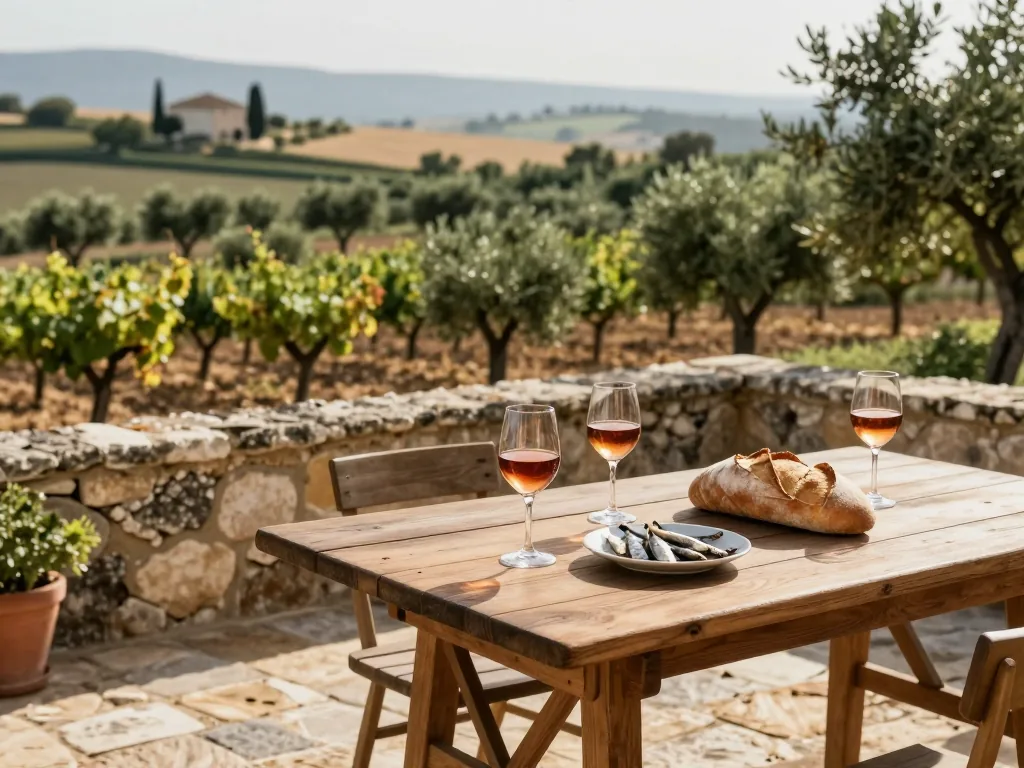
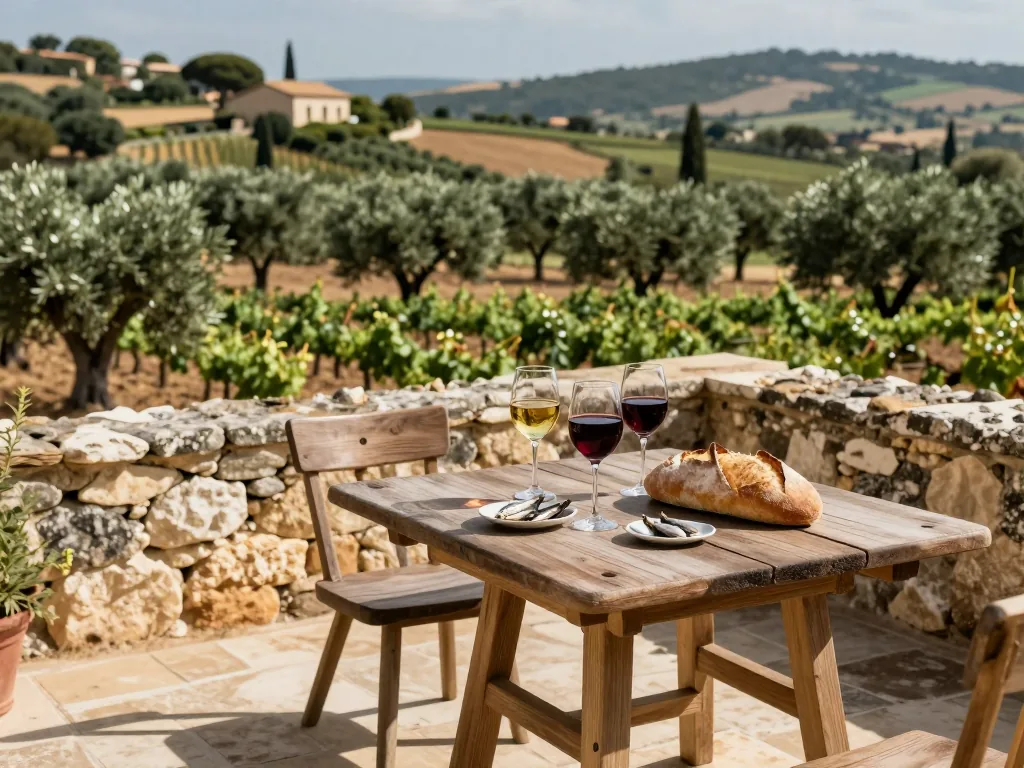
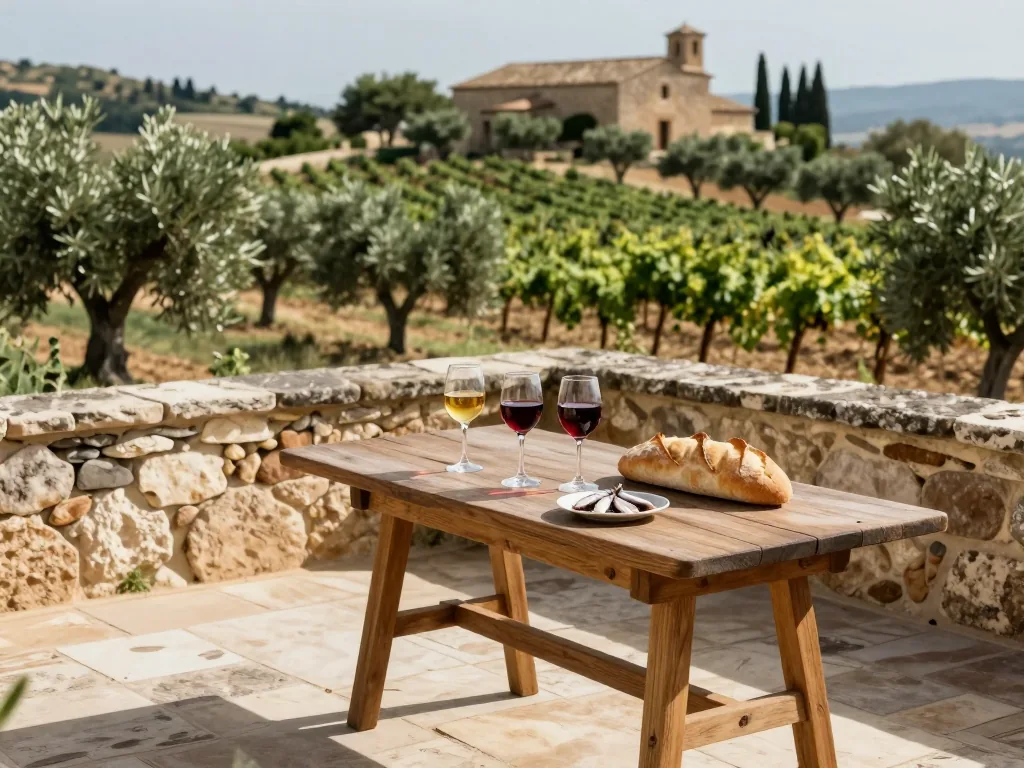
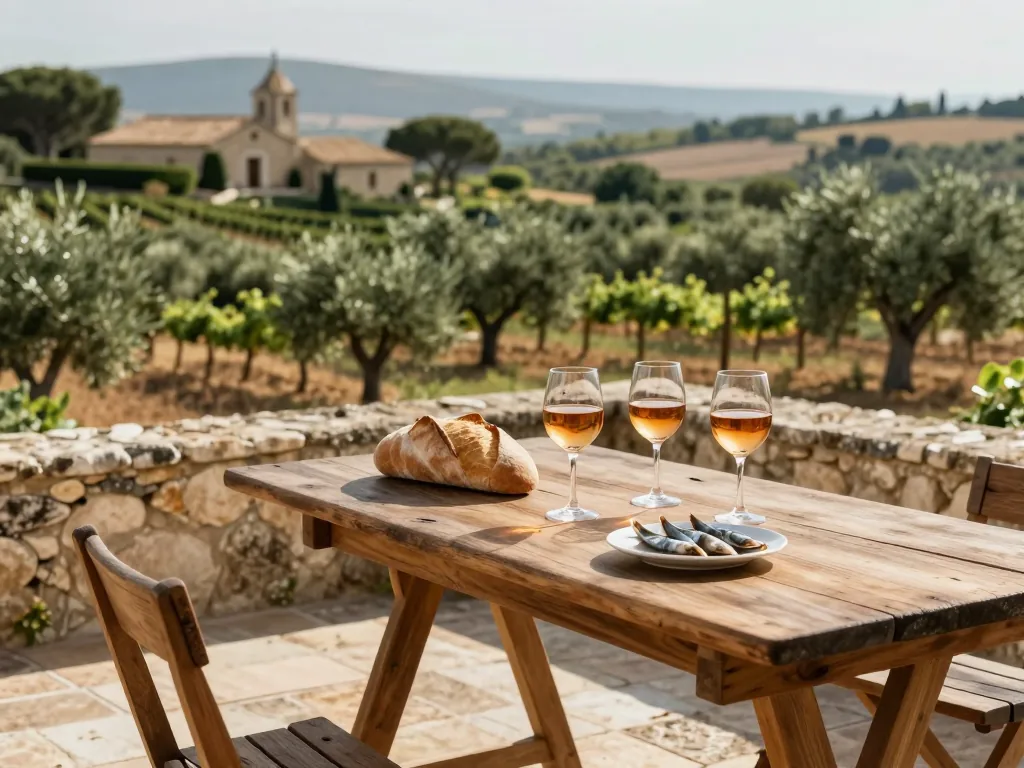
The Costa Brava’s rugged coves supply a daily harvest of anchovies, sardines, and rockfish. The region’s white wines are built precisely for this bounty. Seek out dry Garnatxa Blanca and Macabeu blends—these are the workhorses of the coast. Their brisk acidity and distinctive saline, almost briny finish cut through the natural oiliness of grilled sardines or a plate of boquerones like a squeeze of lemon. For shellfish—clams, mussels, or a simple platter of prawns—pour a young, unoaked Garnatxa Blanca. The key is to avoid any white aged in new oak; vanilla and butter notes will smother the delicate, sweet flesh. Instead, choose the freshest bottling you can find, ideally from a vintage within the last two years. These wines are meant to be drunk young, their vivacity intact. A bottle of a fresh, coastal blend—often labelled simply as “Empordà Blanc”—will rarely set you back more than €14 to €22. It will outperform many far pricier, more famous whites.
Olive Oil, Suquet, and Red Wine Pairings
Move inland, and the pairing logic shifts. The region’s olive oil—often intensely peppery, with a grassy, bitter finish—is a condiment that demands structure. A medium-bodied red, particularly a Garnatxa-Carinyena blend, is the classic match. These reds offer juicy red fruit, gentle tannins, and a rustic earthiness that mirrors the oil’s pungency. Drizzle the oil over grilled vegetables or a simple tomato-rubbed bread, and the wine’s fruit softens the oil’s heat while its acidity cleanses the palate.
The most iconic dish, though, is suquet—a Catalan fisherman’s stew of monkfish or other white fish, potatoes, and a rich, saffron-tinged broth thickened with picada. This is where the rules get wonderfully flexible. Many locals swear by a lighter red, served slightly cool (around 14-16°C), such as a young Carinyena from the inland hills. Its low tannins and bright cherry character won’t overpower the delicate fish, while its body stands up to the stew’s hearty, garlicky broth. Alternatively, a robust white with texture—perhaps a skin-contact Garnatxa Blanca or a Macabeu aged on its lees—can be equally sublime, its slight grip and weight matching the stew’s richness. For suquet, expect to pay from €18 to €30 per bottle for a quality red or textural white that elevates the dish without overwhelming it.
Conclusion
Planning a 2026 trip to the Empordà? Skip the crowded DO Penedès. This rugged corner of Catalonia rewards those who explore its windswept, granite-and-slate terroir, where Garnatxa Blanca and Carinyena develop a salinity no inland vineyard can match. The next step is simple: book late September to catch the harvest buzz, reserve a tasting at a hidden gem like Mas Llunes or Vinyes d’Olivardots, and request a vertical of their old-vine Carinyena. Before you leave, grab a bottle of the 2024 “L’Hereu” from Terra Remota and drink it on the cliffs at Cap de Creus—it’s the Tramuntana wind in a glass. The region’s best vintages are still ahead, and your palate is the only map you need.
Gallery
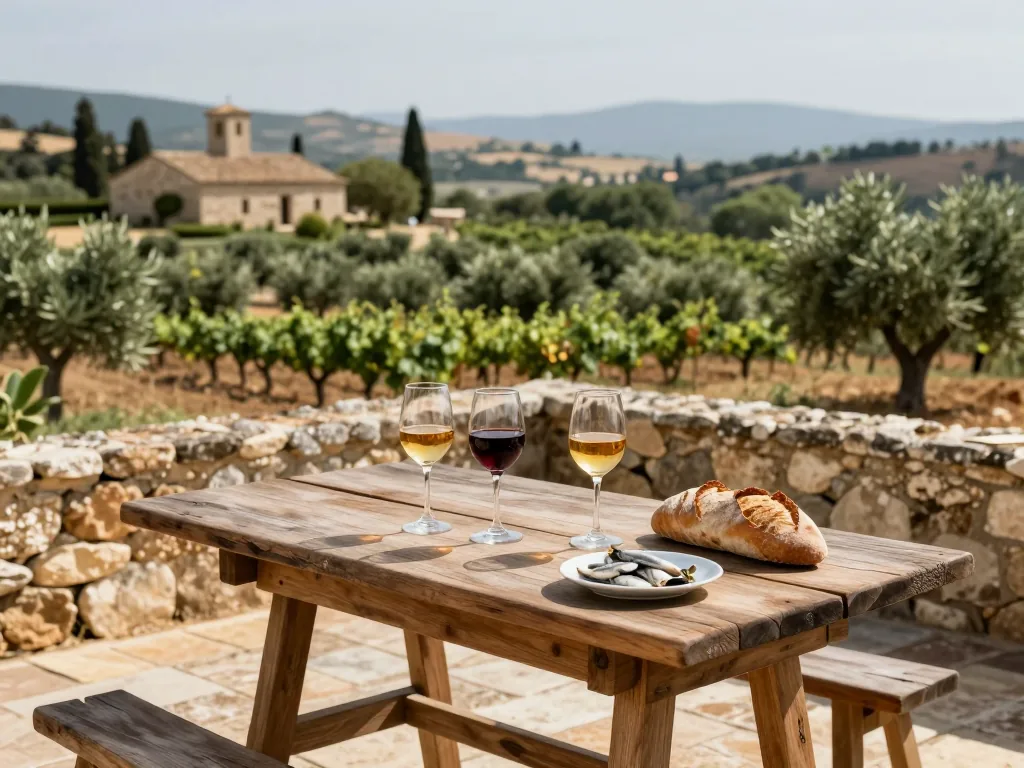
Frequently Asked Questions
What makes Empordà wines unique compared to other Spanish regions in 2026?
Empordà's wines are defined by the Tramontana wind, which stresses vines and concentrates flavors, and by a mix of Mediterranean and Pyrenean influences. In 2026, the region is officially recognized for its high proportion of old-vine Carignan and Grenache, often grown on slate and granite soils, yielding fresh, mineral-driven reds and aromatic whites.
What are the main grape varieties I should look for when tasting in Empordà?
Focus on red Carignan (Cariñena) and Grenache (Garnatxa), which dominate the region, plus the increasingly popular white varieties Garnatxa Blanca and Macabeu. In 2026, many producers are also experimenting with low-intervention styles of Muscat and Chenin Blanc, but the classic red blend of Carignan-Grenache remains the benchmark for a tasting flight.
How does the Tramontana wind affect the tasting experience and wine style?
The wind lowers humidity and reduces fungal pressure, allowing organic farming to thrive, and it thickens grape skins, leading to deeper color and more structured tannins. Expect wines with pronounced acidity and a salty, mineral edge, especially in reds, which often show a distinct freshness that pairs well with local seafood.
What is the best way to structure a self-guided tasting tour in 2026?
Start in the coastal sub-zone of Baix Empordà for lighter, fresher wines, then move inland to Alt Empordà for fuller-bodied reds and sweet Garnatxa. In 2026, many wineries offer by-appointment vertical tastings of old-vine parcels, so book ahead and plan for at least three stops to compare soil types and microclimates.
Are there any new tasting trends or formats in Empordà in 2026?
Yes, several wineries now offer 'wind-terrace' tastings where you sample wines alongside a live anemometer reading, and there is a growing trend of 'orange wine' flights from skin-contact Garnatxa Blanca. Also, 2026 sees a rise in zero-alcohol or low-alcohol versions of traditional blends, made using new dealcoholization tech, though these are niche and clearly labeled.
What food pairings are essential to try during an Empordà tasting?
Pair the reds with local wild boar stew or grilled lamb, and the whites with anchovies from the nearby port of L'Escala or a simple pa amb tomàquet. For sweet Garnatxa, try it with the region's traditional almond cake (panellets) or aged sheep's milk cheese from the Albera mountains.
How should I handle the high alcohol levels often found in Empordà reds?
Many 2026 vintages are being bottled at lower alcohol (13.5–14.5%) than in the past due to earlier harvesting, but some old-vine Carignans still reach 15%. Taste in small sips, use a spittoon, and ask for aeration—decanting for 30–60 minutes will soften the alcohol heat and reveal more savory, herbal notes.
What is the current state of organic and biodynamic certification in Empordà?
As of 2026, over 60% of the region's wineries are certified organic or in conversion, and about 15% are biodynamic (Demeter or Biodyvin). Look for the 'Empordà Sostenible' seal on bottles, which guarantees a set of environmental practices specific to the region's wind and water conservation.
Can I find aged or vintage-dated wines from Empordà, or are they mostly young?
Most Empordà reds are meant to be drunk within 3–5 years, but there is a growing category of 'Gran Reserva' and 'Vinya Vella' (old-vine) wines aged for 18–30 months in oak. In 2026, the 2020 and 2021 vintages are excellent for cellaring, while the 2023 whites are best consumed now for their aromatic intensity.
What should I know about visiting wineries in Empordà regarding accessibility and language in 2026?
Most wineries now offer English and Catalan tours, with French and German increasingly common, but always confirm in advance. Many cellars are built into hillsides with steep steps, so if you have mobility issues, ask for the 'flat access' tasting route, which about half the region's bodegas now provide.