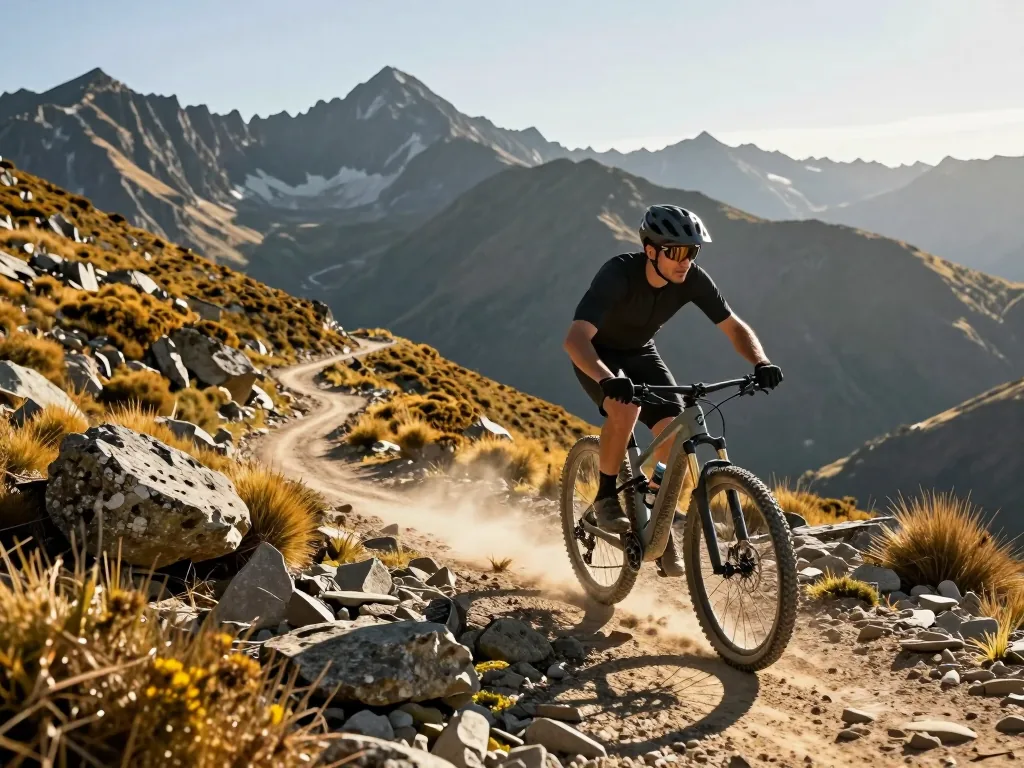
Catalonia’s Best Mountain Trails: Your 2026 Guide to E-Bike Rentals
Discover Catalonia's best mountain trails with our 2026 e-bike rental guide—top routes, tips, and gear for an epic ride.
Catalonia’s jagged Pyrenean ridges and volcanic hinterlands are no longer just for the lycra-clad elite. A new wave of high-performance e-bikes has put the region’s most dramatic trails within reach for every rider. Chasing the limestone drops of Montserrat? Prefer the silent fir forests of the Cadi-Moixeró? This guide cuts through the noise, showing you exactly where to rent, what to pay, and which routes deliver the biggest thrill per watt. Drawing on local rider intel and the latest 2026 fleet upgrades, you’ll get a practical, mile-by-mile plan for conquering Catalonia’s best mountain terrain. No need to break a sweat—or your budget.
Why Choose an E-Bike for Catalonia’s Mountain Trails
The 2026 Sustainable Tourism Push
Catalonia’s official tourism body has made a decisive move: e-bike tourism is now a designated key pillar for 2026. This isn’t just greenwashing—it comes with tangible infrastructure. Dedicated e-bike routes now weave through the Pyrenees, along the Costa Brava’s coastal cliffs, and into the Penedès wine country, each mapped specifically for pedal-assist ranges and charging points. For the traveler, this means a practical shift: renting an e-bike cuts your carbon footprint dramatically compared to a diesel shuttle van or a convoy of hire cars ferrying bikes to trailheads. But the real win is experiential. On an e-bike, you can cover 1,200 to 1,500 vertical meters in a morning ride without arriving exhausted. You’ll pedal past wineries and Roman ruins, stop for a swim in a mountain lake, and still have energy for a technical descent in the afternoon. The 2026 route network is designed so that you’re never more than 15 kilometers from a certified rental hub or a fast-charging station, making multi-day traverses genuinely seamless.
Matching Terrain to Assistance Levels
Not all e-bikes are created equal, and Catalonia’s terrain punishes mismatched setups. For 2026, most rental fleets across Girona and Barcelona’s hinterland standardize on mid-drive motors—typically Bosch or Shimano—with 250W continuous power and a 25 km/h pedal-assist ceiling. This setup is ideal for the region’s greenways (like the Carrilet routes) and moderate singletrack around Montseny or El Montnegre, where the motor smooths out rolling hills without overwhelming your rhythm. However, if your plan involves the steep, loose ascents of the Pyrenees—think Vall de Núria or the colls above Ripoll—you need to specifically request a higher-torque model, usually 85 Nm or above. These handle 15–20% gradients with ease, letting you spin a low cadence while the motor does the heavy lifting. One critical caveat for 2026: assistance cuts off at 25 km/h in all EU-compliant fleets, so on fast, flowing descents, you must rely on your own skill and braking. That’s not a drawback—it keeps the ride honest. For rentals, expect to pay from €45 to €75 per day for a standard 250W mid-drive, and from €65 to €110 per day for a high-torque enduro model with a larger battery. Most shops in Catalonia now include a helmet, a basic tool kit, and one spare battery in those prices, but confirm before you book. Choose your motor to match the day’s profile, not just the bike’s color.
Legal Requirements and Rider Eligibility in 2026
Who Can Ride and What You Must Carry
Before you clip into a pedal-assist machine and chase the sunrise over the Pyrenees, know exactly where you stand legally. As of 2026, e-bikes in Spain are classified as bicycles—not mopeds or motorcycles—provided they meet two strict criteria: a maximum continuous rated power of 250W and pedal assistance that cuts off at 25 km/h. If your rental bike exceeds either threshold, it falls into a different legal category requiring registration, insurance, and a driving license. Stick to the 250W/25 km/h class, and you are golden.
You must be at least 16 years old to ride an e-bike on any public road or trail in Catalonia. There is no upper age limit, but rental operators will demand a valid photo ID (passport or EU national ID card) and a credit card for a security deposit—typically from €100 to €300 per bike. No driving license is needed for this class, which makes it an accessible option for international visitors. Helmets are non-negotiable: mandatory for all riders on interurban roads and strongly enforced by the Mossos d’Esquadra. Rental shops will not hand over the keys without one, so if you arrive without a helmet, expect to rent or buy one on the spot (budget from €15 to €40 for a basic trail helmet).
Updated Traffic Rules for Mountain Trails
Catalan traffic law received a significant update in 2026, and it directly affects your mountain experience. When riding outside urban areas—which includes virtually every trail you will tackle—your e-bike must be equipped with a working bell, front and rear lights, and reflective elements on the pedals and wheels. These are not accessories; they are legal requirements, and rental fleets in Catalonia have updated their bikes accordingly. Check your rental bike before leaving the shop, as a missing reflector can result in a fine.
The more critical change concerns trail access. You cannot ride on any trail with a slope greater than 15% unless that trail is explicitly marked as bike-accessible. This rule was introduced to protect fragile singletrack and reduce user conflicts with hikers. The practical consequence is that many steep, technical descents in Montseny Natural Park and sections of the Pyrenees are now off-limits to e-bikes, even if they appear open at first glance. Always look for official signage at trailheads—a green bike icon means go, a red crossed-out bike means turn back. Ignorance is not an excuse, and fines for riding on restricted trails range from €200 to €500. Your rental operator should provide a map of permitted routes, but do not rely solely on that; download an offline trail app and cross-reference it with local signage before committing to a climb.
Choosing the Right Rental Operator and Bike
Independent Rental vs. Guided Tours
For the autonomous rider, independent e-bike rental remains the most flexible option, with shops concentrated in Barcelona, Girona, and Lleida, as well as smaller hubs like Vielha and Sort. Renting independently lets you craft your own itinerary—whether that means looping the volcanic terrain of La Garrotxa or climbing the gravel switchbacks of the Port del Comte. But this freedom carries the weight of route planning and basic mechanical self-sufficiency. Guided e-bike tours, by contrast, suit riders unfamiliar with Catalan trail markers (which can be inconsistent outside marked GR routes) or those who want to push technical descents without navigation worries. Guides also carry satellite communicators and often secure pre-negotiated access to private trails on collab farms. A major 2026 trend is the multi-day rental with swappable battery packs—operators in the Pyrenees now commonly offer a second battery for a small daily surcharge, but confirm this at booking, as not all shops stock enough spares for peak summer weeks.
What to Check Before You Roll Out
Before signing anything, do a thorough walk-around. Battery range is the single most critical factor: expect a realistic 60–100 km depending on assist mode, terrain, and your pedaling input. Ask what capacity is fitted (typically 500–750 Wh) and whether the display adjusts remaining range for elevation gain. Inspect tire tread and sidewalls for cuts—Catalonia’s limestone scree is brutal on rubber. Brake pads should have at least 2 mm left; sintered pads are a must for long descents like those down from Puigmal. Ask about the motor brand: Shimano, Bosch, and Yamaha are the most reliable for mountain use, and verify the bike has walk-assist mode—indispensable for pushing up steep, non-rideable sections like the final push to Sant Jeroni. The rental should include a charger and a basic repair kit (multi-tool, tire levers, spare tube), but don’t assume it. Finally, ask about their breakdown policy for remote trails: do they offer pickup within a certain radius, or is roadside assistance outsourced? A reputable operator will have a clear protocol, typically with a mechanic on call. Rental prices for a quality full-suspension e-MTB in 2026 range from €45 to €80 per day, with multi-day discounts bringing the weekly rate down to roughly €250 to €400. Always book a day ahead in high season (June–September) to secure a bike with fresh pads and a fully charged battery.
Top Mountain Biking Regions for E-Bike Rentals
Choosing where to unclip and charge up is half the adventure. Catalonia’s terrain splits neatly into two distinct personalities for e-mountain biking. In the high Pyrenees, the resorts of Vall de Núria and La Molina are the undisputed kings of altitude. These zones offer a staggering variety of marked trails, from flowy, shaded forest tracks that wind through pine groves to exposed alpine ridges where the views stretch into France. Stick to the valley loops, and the gradient stays forgiving. But the real thrill is the technical climbs—made brutally fun with a mid-drive motor. Here’s a key update for 2026: the Catalan government’s ‘Estrategia del Cicloturismo’ has finally rolled out a network of fast-charging stations at key trailheads and mountain refuges. That means you can confidently plan a 60-kilometer loop without range anxiety. Do note the seasonality—snow lingers on high passes well into June, so check the webcams before you book. Even in July, a thermal layer and a windproof shell are non-negotiable; at 2,200 meters, the weather shifts from sun to sleet in an hour. Rental shops in both resorts typically offer Bosch or Shimano-equipped hardtails and full-suspension models, with daily rates ranging from €45 to €90 per bike, depending on battery size and suspension travel.
Further south and east, the character shifts completely. The Costa Brava delivers a rare combination: coastal singletrack with sweeping Mediterranean views and moderate, punchy climbs that won’t crush an intermediate rider. The trails here are dry, dusty, and fast, with rocky switchbacks that reward precise throttle control. Just inland, Montseny Natural Park—a UNESCO biosphere reserve—offers the polar opposite. Dense, humid oak and beech forests, root-laced descents, and slippery granite slabs will genuinely test your e-bike’s traction and your own nerve. This is where you learn why a torque-sensing motor beats a cadence sensor. A smart logistical tip for 2026: many rental operators have set up shop inside converted former train stations along the Vías Verdes (greenways). You get immediate, car-free access to flat rail trails for warming up, then you can peel off onto the singletrack networks that branch into the hills. For the Costa Brava/Montseny combo, expect rental prices from €40 to €75 per half-day. Full-day rates often include a helmet, a spare tube, and a digital route map preloaded on a handlebar GPS.
Navigating the Vías Verdes Greenways Network
Catalonia’s Vías Verdes network is the region’s best-kept secret for e-bike riders who want to cover serious ground without the constant grind of technical singletrack. Spanning over 1,000 kilometers of converted railway tracks, these paths are wide, gently graded, and completely free of motor traffic. For anyone renting an e-bike in Catalonia, they offer an immediate, low-stress launchpad—especially if you’re new to mountain biking or simply need a recovery day between big climbs. The surfaces vary from compacted gravel to smooth asphalt, and because the gradients rarely exceed 2–3%, your battery will last far longer than on a typical trail loop. Many rental shops are actually based in restored former train stations along these routes, meaning you can roll out of the rental office and be on a greenway within meters. Daily rental rates for a decent mid-drive e-bike (with 500Wh battery and front suspension) run from €45 to €75 per day, with multi-day discounts often dropping that to €35–€55 per day.
The real magic, though, is how these greenways act as springboards into Catalonia’s wilder terrain. Several routes—like the Via Verde del Carrilet in Girona—terminate at the foot of Pyrenean valleys, where you can switch from the flat rail bed onto marked mountain trails for a proper ascent. This hybrid approach is ideal for e-bikers who want to save their battery for the steep stuff. Before you commit to a connecting path, however, check the 15% slope rule. Some greenway exits have short but brutally steep ramps (often old access roads for maintenance vehicles) that are not officially bike-accessible. These ramps can exceed 15% grade and are frequently loose or broken. A quick look at the local trail map or a chat with your rental shop will flag these spots. The rule of thumb: if a connector looks like a driveway climbing away from the greenway, assume it’s off-limits. Stick to marked bike routes, and you’ll find that the Vías Verdes give you both a scenic cruise and a strategic head start—without ever forcing you to fight for a parking spot at a trailhead.
Weather, Seasons, and Route Planning for 2026
Summer Heat and High-Altitude Snow
Catalonia’s mountain terrain rewards flexible planning, and 2026’s weather patterns demand respect at both extremes of the altitude spectrum. On lower trails in the Costa Brava and Penedès, summer temperatures routinely climb past 35°C from late June to mid-August. Riding at midday in these coastal and vineyard zones isn’t just uncomfortable—it can be genuinely dangerous, with heat exhaustion and dehydration a real risk. The smart approach is to schedule e-bike outings for early morning departures, ideally by 7:30 a.m., or wait until the heat breaks after 6 p.m. Many local rental shops now offer twilight rates for this reason, and you’ll find trails far quieter, with wildlife more active. The high Pyrenees, meanwhile, present the opposite challenge: snowpack can persist on north-facing slopes well into June, blocking classic passes like the Coll de Pal or higher sections of the Vall de Núria circuit. Afternoon thunderstorms are near-daily in July and August above 2,000 meters, so always check the Meteocat mountain forecast before collecting your e-bike. If lightning risk is high, reroute to forested valleys or lower ridges—exposed granite summits are no place for an aluminum-frame e-bike. A good rule for 2026: ride the Pyrenees before 1 p.m., and save lower, shaded trails for the afternoon.
Charging and Battery Management on Long Rides
The 2026 season brings a welcome upgrade: charging points are now installed at key trailheads, mountain refuges, and even a handful of remote shepherd’s huts across Catalonia. That means a multi-day traverse from La Cerdanya to Aigüestortes National Park is feasible without hauling a spare battery—provided you plan overnight stops around these stations. But don’t let the infrastructure lull you into complacency. On hot days, lithium-ion batteries lose efficiency, and real-world range can drop by up to 20% compared to spring conditions. When temperatures hover near 30°C, climb in eco mode to conserve juice, saving turbo for final steep switchbacks or technical sections needing instant torque. Also, charging a hot battery immediately after a long descent can degrade its lifespan; let it cool for 30 minutes before plugging in. For lunch stops at remote huts like the Refugi de Coma de Vaca—which has no power—carry a lightweight portable charger; solar models work well at altitude to top up during breaks. For day trips, budget 1% battery per 1.5 km of mixed terrain. If you’re riding over 60 km with significant climbing, consider renting a second battery (typically €15–€25 per day) rather than risking a dead motor on the return leg.
Safety, Etiquette, and Trail Access Rules
Riding Catalonia’s rugged terrain on an e-bike is exhilarating, but it comes with a shared duty to protect both yourself and the landscape. Before you push the throttle, lock in the non-negotiables for a safe, respectful ride.
Essential Gear and Communication
Beyond the legally required bell, lights, and reflective elements, your pack should be a lifeline, not an afterthought. Always carry a compact first-aid kit—blister treatment, antiseptic wipes, and a pressure bandage for rocky scrapes. A whistle beats shouting when you’re in trouble off-trail; it cuts through wind and streams. Your phone is your most critical tool, yet service vanishes in the deep ravines of the Pyrenees. Download offline maps for your specific zones—Montseny, Cadí-Moixeró, or the Aigüestortes approaches—before leaving the rental shop. In remote areas, tell someone your exact route and expected return time; a simple WhatsApp to your accommodation host can turn a minor delay into a full search. Most reputable rental operators now provide a GPS tracker or pre-loaded route app on your handlebar mount—use it without exception. It navigates you and lets the company locate you if you fail to check in.
Respecting Trail Users and the 15% Rule
Catalonia’s mountain trails are a shared commons, bustling with hikers, trail runners, and semi-wild livestock in the high pastures. You’re the fastest mover, so you yield. Slow to a walking pace when passing pedestrians, offer a friendly “Bon dia,” and never blast around blind corners—a hiker with a trekking pole or a startled horse spells disaster. On wet or eroded trails, get off and walk; deep ruts and mud damage the path for weeks, and e-bike torque worsens it. The 15% slope restriction is the single most important rule for 2026. Strictly enforced in Montseny and the Pyrenees, it means that if a trail’s gradient exceeds 15% and isn’t explicitly marked bike-accessible, you must dismount and push. Rangers actively patrol with GPS slope meters, and fines for riding restricted trails range from €90 to €600 per incident. When in doubt, walk your bike—it protects the trail, your deposit, and your wallet. Always check local signage at trailheads, as access maps update seasonally.
Practical Logistics: Deposits, Insurance, and Multi-Day Rentals
What to Expect at the Rental Counter
Walking into a Catalan e-bike rental shop in 2026 is refreshingly straightforward, but a few specifics can save you time. Bring your valid passport or EU ID—no exceptions—and a credit card. The deposit is almost always held as a pre-authorization, not a charge, typically ranging from €150 to €400 per bike. This means the funds are blocked on your card but not deducted, provided you return the bike undamaged. Do not rely on a debit card; many shops in Girona, Vic, and the Pyrenees foothills refuse them for deposits.
The critical question at the counter is about damage waivers. Optional damage insurance, costing roughly €8 to €15 per day, is worth every cent on Catalonia’s rocky singletrack and limestone slabs. Without it, you’re liable for scratched frames, bent derailleurs, or cracked battery housings—repairs that can easily exceed the waiver fee. Also, explicitly ask about their puncture and chain policy. Some operators include free roadside assistance within a 30-kilometer radius of the shop, while others charge a flat call-out fee of €25 to €60. Confirm whether a snapped chain is considered mechanical wear (covered) or rider negligence (not covered). A shop that replaces tubes without quibbling is a keeper.
Multi-Day and Point-to-Point Rentals
For the classic Girona-to-Pyrenees traverse, or a loop through the volcanic Garrotxa region, point-to-point rentals are your best logistical tool. In 2026, several operators—particularly those based in Girona and Olot—offer flexible drop-off in towns like Ripoll, Puigcerdà, or even Andorra. The key innovation is the battery-swap network: instead of waiting for a four-hour charge, you exchange depleted batteries for fresh ones at partner cafes, hotels, or trailhead kiosks. This service is usually bundled into your rental rate, but confirm the network’s density on your planned route before booking.
Before you sign, ask for the drop-off location’s exact opening hours—many mountain-town shops close by 14:00 on Saturdays. Also, inquire about luggage transfer. On the Costa Brava coastal trails or the Penedès wine routes, a common service is moving your bags between your day’s start and end hotels. This costs from €15 to €30 per bag per day, depending on distance and whether you book it through the rental shop or a third-party courier. It transforms a multi-day ride into a genuinely carefree experience, letting you carry only a hip pack with water and snacks. Always confirm this service at the time of booking, as last-minute requests are rarely accommodated in peak season.
Conclusion
Catalonia’s mountain trails blend rugged beauty with serious technical variety. With top rental shops now stocking 2026 models—long-range batteries, smart assist modes—there’s never been a better time to ride them on an e-bike. The key? Choose the right rental. Not just the bike, but route-specific support and local guidance. That can lift a good ride into something unforgettable, especially on climbs like Vall de Núria or the Prades massif. Your next step is straightforward. Pick a base—Girona, Berga, or Tarragona. Book a bike with at least 750Wh capacity. Confirm the shop’s trail map for open routes this season. Don’t overthink the gear. Focus on the experience. Reserve early for summer weekends. Let the motor handle the altitude while you soak in the Pyrenees’ silence. The trailhead is waiting. All you need to do is pedal.
Gallery
Frequently Asked Questions
Do I need a specific license or permit to rent an e-bike for mountain biking in Catalonia in 2026?
No, for standard pedal-assist e-bikes (max 250W and 25 km/h assistance) you only need to be at least 16 years old and carry a valid ID. For high-power e-mountain bikes (over 250W or with throttle), a moped license (AM or higher) is required, and rental shops will verify this before handing over the bike.
What is the maximum range I can expect from a rental e-MTB in Catalonia's mountain terrain in 2026?
Most 2026 rental fleets use 750Wh–900Wh batteries, giving a realistic range of 60–90 km on mixed singletrack with moderate climbing, depending on your assist level and rider weight. For demanding routes like the Pyrenees or Montseny, plan for 40–60 km if you use Turbo mode heavily; shops provide spare batteries for multi-day rentals.
Are there any trail restrictions for e-MTBs in Catalonia's natural parks in 2026?
Yes, many protected areas (e.g., Aigüestortes, Cap de Creus) restrict e-MTBs to designated trails with a maximum assistance speed of 25 km/h, and some singletracks are off-limits to any motorized assistance. Always check the specific park's 2026 regulations via the rental shop's GPS app, which now includes live geofenced alerts for restricted zones.
How do rental shops handle charging for multi-day e-bike tours in Catalonia?
Most 2026 rental shops offer swappable battery packs with a deposit, and you can charge at any standard EU socket (220V) in mountain refuges or hotels; many shops also partner with local e-bike charging stations in villages like La Molina or Ripoll. For remote Pyrenees crossings, you can rent a solar folding panel or a second battery, but book these in advance as stock is limited.
What is the typical insurance coverage for e-MTB rentals in Catalonia in 2026?
Basic rental includes third-party liability and theft coverage, but damage to the frame, motor, or battery from crashes is usually excluded unless you buy 'full coverage' (around 10–15% of rental cost). In 2026, full coverage also includes assistance for motor breakdowns and battery failure, but not for riding outside marked trails or under the influence.
Are there guided e-MTB tours available in Catalonia, and do they include rental?
Yes, most established rental companies (e.g., in Girona, Berga, or Sort) offer guided half-day to week-long tours with rental included, and 2026 tours now feature real-time e-bike telemetry for the guide to monitor battery levels. These tours are ideal for first-timers because guides handle route permits, mechanical issues, and provide backup batteries for long climbs.
What should I check on the e-bike before starting a mountain ride in Catalonia?
Verify the battery is fully charged and securely locked, test both brakes and the dropper post, and check tire pressure (recommended 2.0–2.5 bar for rocky trails). Also, confirm the motor firmware is updated to 2026 standards for smoother torque on steep gravel, and ask the shop to show you how to switch between Eco/Trail/Turbo modes on the specific display model.
Can I rent an e-MTB in one Catalan town and return it in another?
Many 2026 rental networks allow one-way rentals between major hubs (e.g., Barcelona to Andorra or Girona to Costa Brava) for an extra logistics fee, but not for remote mountain villages. For point-to-point Pyrenees routes, shops usually offer a shuttle service for your luggage and the bike's battery, while you ride the frame—confirm this when booking.
How does weather in Catalonia affect e-MTB rental in 2026, especially in summer?
Summer (June–September) is hot, so battery range drops by up to 20% due to heat and air conditioning for your body—plan for shorter rides and carry water. In 2026, many shops offer 'heat-adaptive' bikes with battery cooling fins, but you should still avoid riding between 13:00–16:00 in lowland areas; spring and autumn are ideal, with fewer crowds and cooler trails.
Are there any weight or height limits for renting an e-MTB in Catalonia?
Most 2026 rental e-MTBs are designed for riders between 150 cm and 200 cm tall, with adjustable seatposts and stems; weight limits are typically 120 kg including gear, due to motor and wheel stress. If you exceed this, some shops offer reinforced frames with a 140 kg limit, but you must request this at booking and may need to pay a small surcharge.